
Five Women Who Shaped the World of Design
Celebrating Women’s History Month
March is Women’s History Month, a time to recognize the creativity, leadership, and innovation women have contributed across industries. In the design world, women have played a defining role in shaping how we experience our homes, workplaces, and public spaces.
From early pioneers who helped establish interior design as a profession to contemporary designers redefining modern aesthetics, these women have left a lasting mark on the industry. Here are five influential designers whose work continues to inspire the spaces we create today.
Elsie de Wolfe (1865–1950)

Newclipping from the Evening Star, 1929
Often credited as one of the first professional interior designers, Elsie de Wolfe helped transform decorating into a recognized career in the early 1900s. At a time when Victorian interiors were heavy and ornate, she introduced a lighter, more comfortable style inspired by her summers in France.
Her breakthrough project, the Colony Club in New York (the city’s frist women’s social club), showcased bright rooms, pale colors, and airy furnishings that felt fresh and modern for the time. The project launched her career and quickly made her one of the most sought-after decorators of the era. Her repitor of clients included some icons such as Condé Nast, Paul-Louis Weiller, Cole Porter, and the Duchess of Windsor.
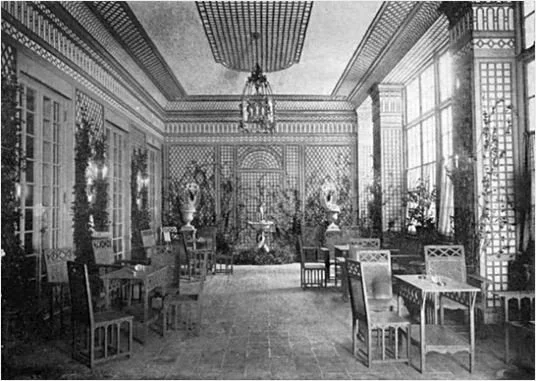
The Trellis Room, Colony Club, New York (1918)
Through her book The House in Good Taste and numerous articles and lectures, de Wolfe helped bring design ideas to a broader audience and encouraged people to create homes that reflected their personality rather than their status. Her work laid the foundation for interior design as a professional practice and made thoughtfully designed homes more accessible to the public.
Dorothy Draper (1889–1969)
Dorothy Draper is widely recognized as the first commercial interior designer, bringing interior design into large-scale public spaces such as hotels, restaurants, and apartment buildings.
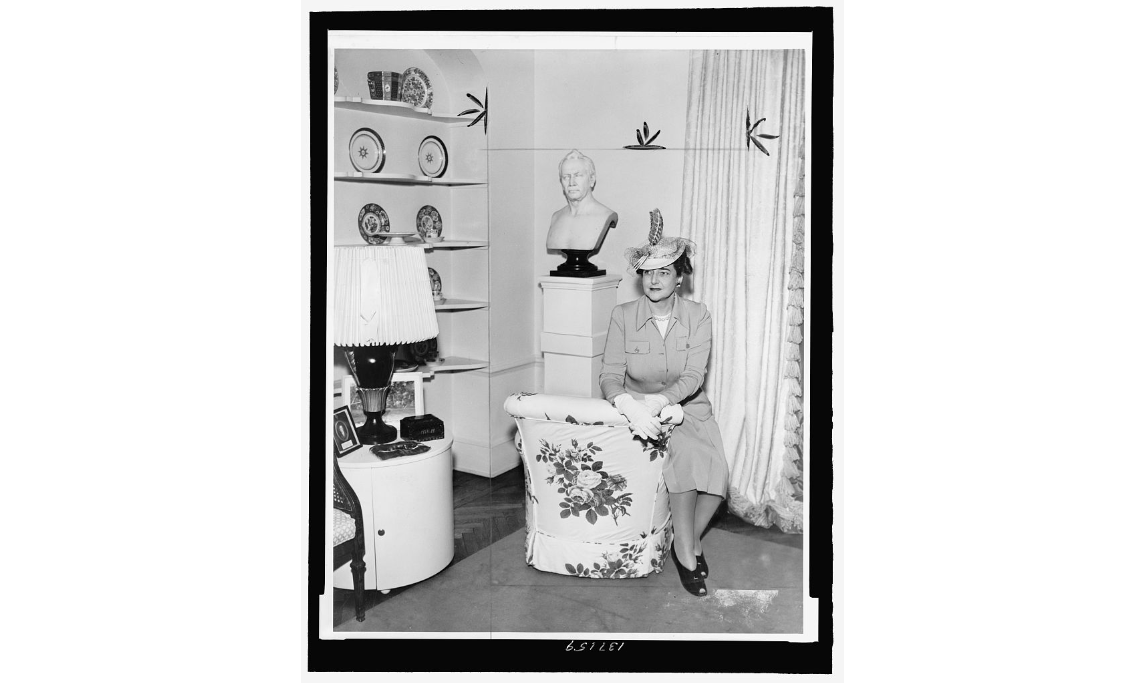
Dorothy Drapery, 1942
In 1925 she founded Dorothy Draper & Company, which remains the oldest continuously operating interior design firm in the United States. Draper’s work introduced a bold and theatrical style characterized by vivid color palettes, dramatic patterns, black-and-white checkerboard floors, and oversized classical details. She referred to her signature aesthetic as “Modern Baroque.”
One of her most famous projects was the redesign of The Greenbrier Resort in West Virginia, a massive undertaking that transformed more than 600 guestrooms and public spaces in just sixteen months. Draper designed everything from the interiors to menus and staff uniforms, creating a fully immersive visual identity for the resort.
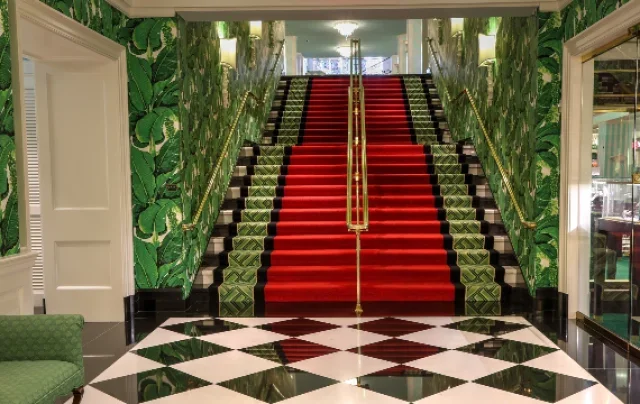
The Greenbrier Stairs
Her work helped demonstrate that design could shape the experience of large public environments, paving the way for the hospitality and commercial design industries we know today.
Marion Mahony Griffin (1871–1961)
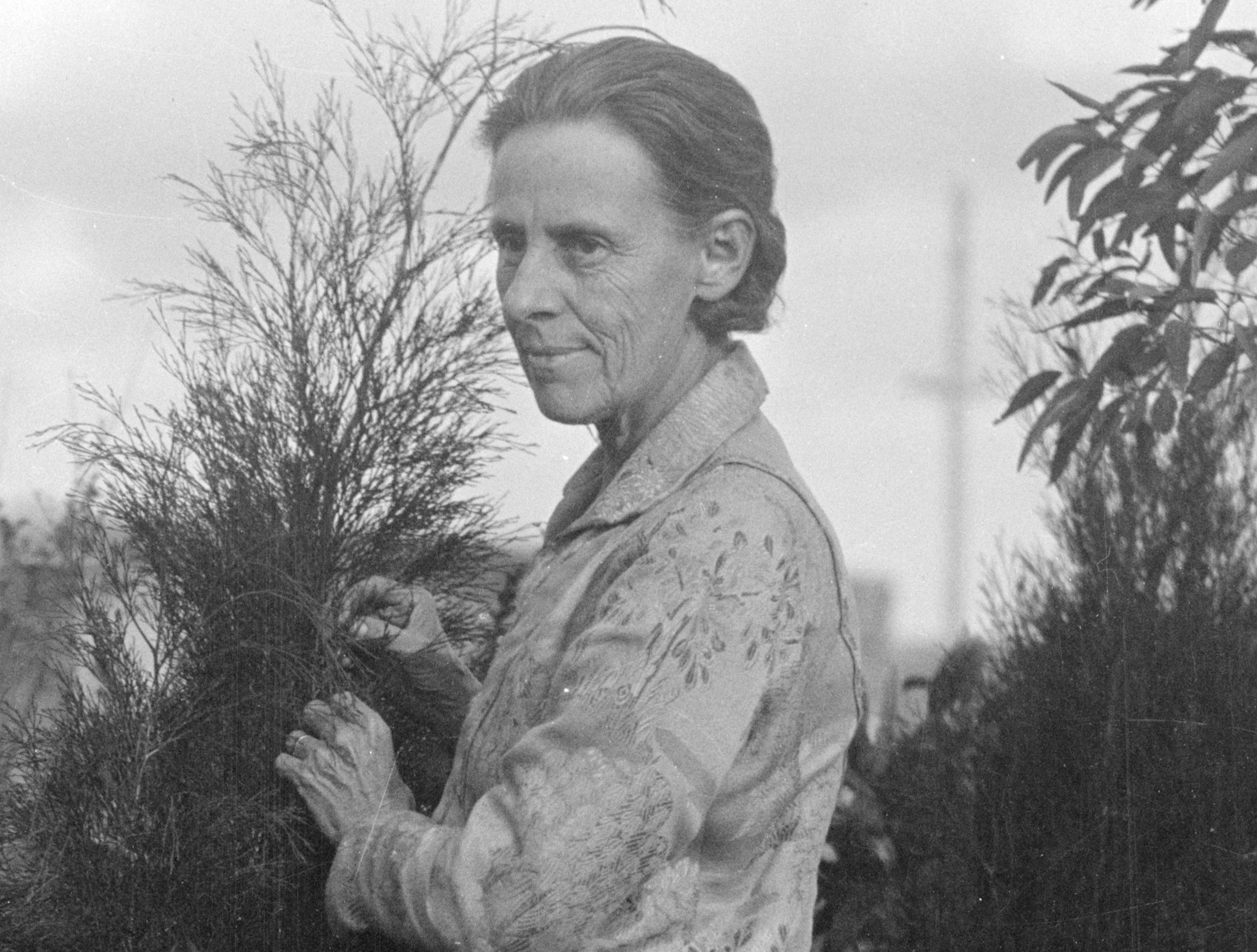
Marion Mahony Griffin, 1930
Marion Mahony Griffin was one of the earliest licensed female architects in the United States and a key figure in the development of Prairie School architecture.
After graduating from the Massachusetts Institute of Technology—one of the few women studying architecture at the time—she joined the studio of Frank Lloyd Wright, where she worked for over a decade. Mahony Griffin became renowned for her extraordinary architectural renderings, which used intricate linework and naturalistic elements to bring architectural concepts vividly to life.
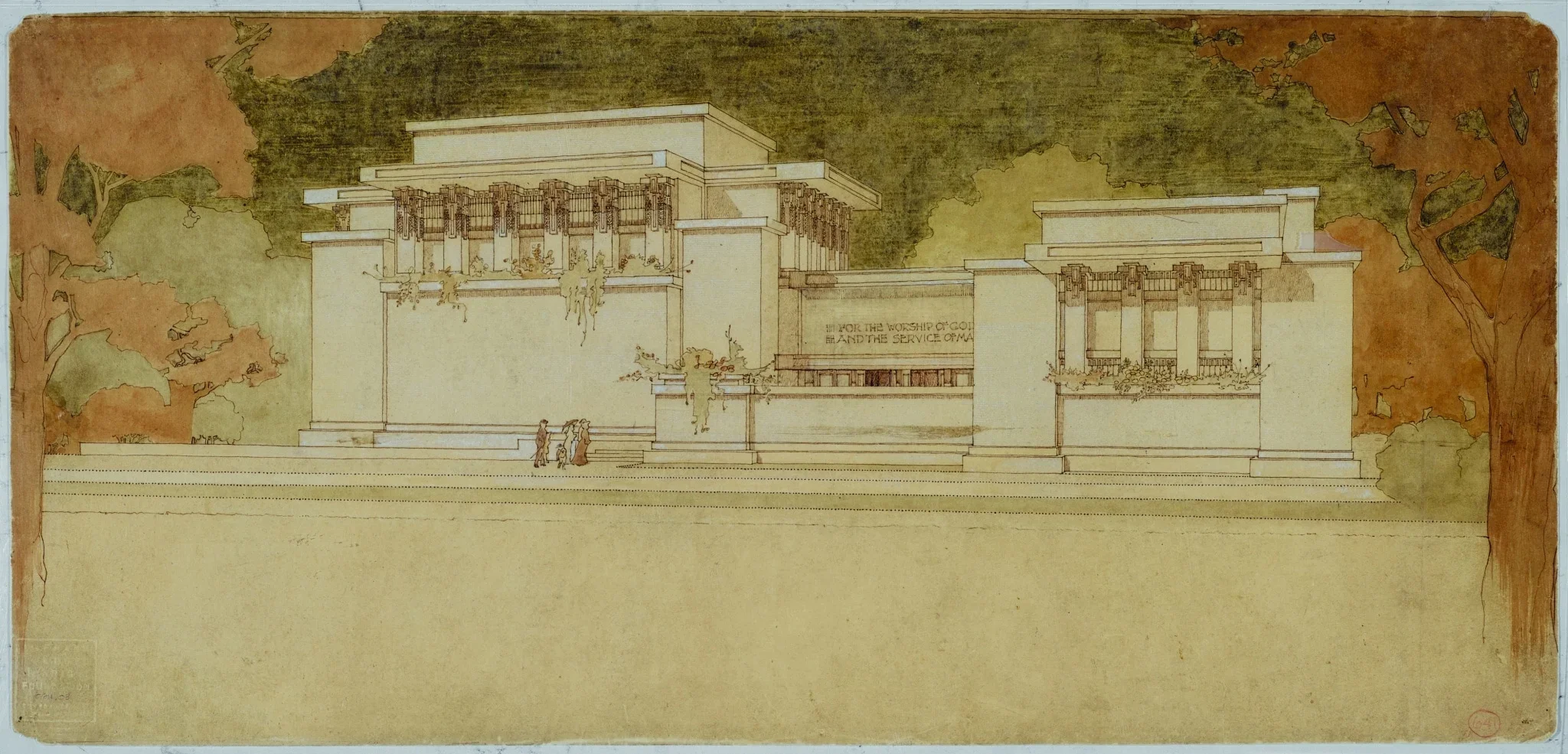
Mahony’s rendering for Unity Temple
Later, she and her husband Walter Burley Griffin established their own practice and collaborated on hundreds of projects across the United States, Australia, and India. Her drawings were particularly influential in the winning design for Canberra, Australia’s capital city, helping convey the vision for the city’s relationship to its surrounding landscape.
While her contributions were long overshadowed by male colleagues, Mahony Griffin’s work is now recognized as a vital influence in early modern architecture and architectural visualization.
Florence Knoll Bassett (1917–2019)
Florence Knoll Bassett redefined the relationship between architecture, furniture, and interior space in the mid-20th century. Trained as an architect and influenced by modernist leaders like Ludwig Mies van der Rohe and Walter Gropius, she approached interiors as part of a larger architectural system.
At Knoll Associates, she led the company’s Planning Unit. Rather than treating interiors as decoration, Knoll approached design as spatial architecture, integrating furniture, textiles, lighting, and layout into cohesive environments. Her work helped shape the modern office and introduced principles of spatial organization that remain central to interior design today.
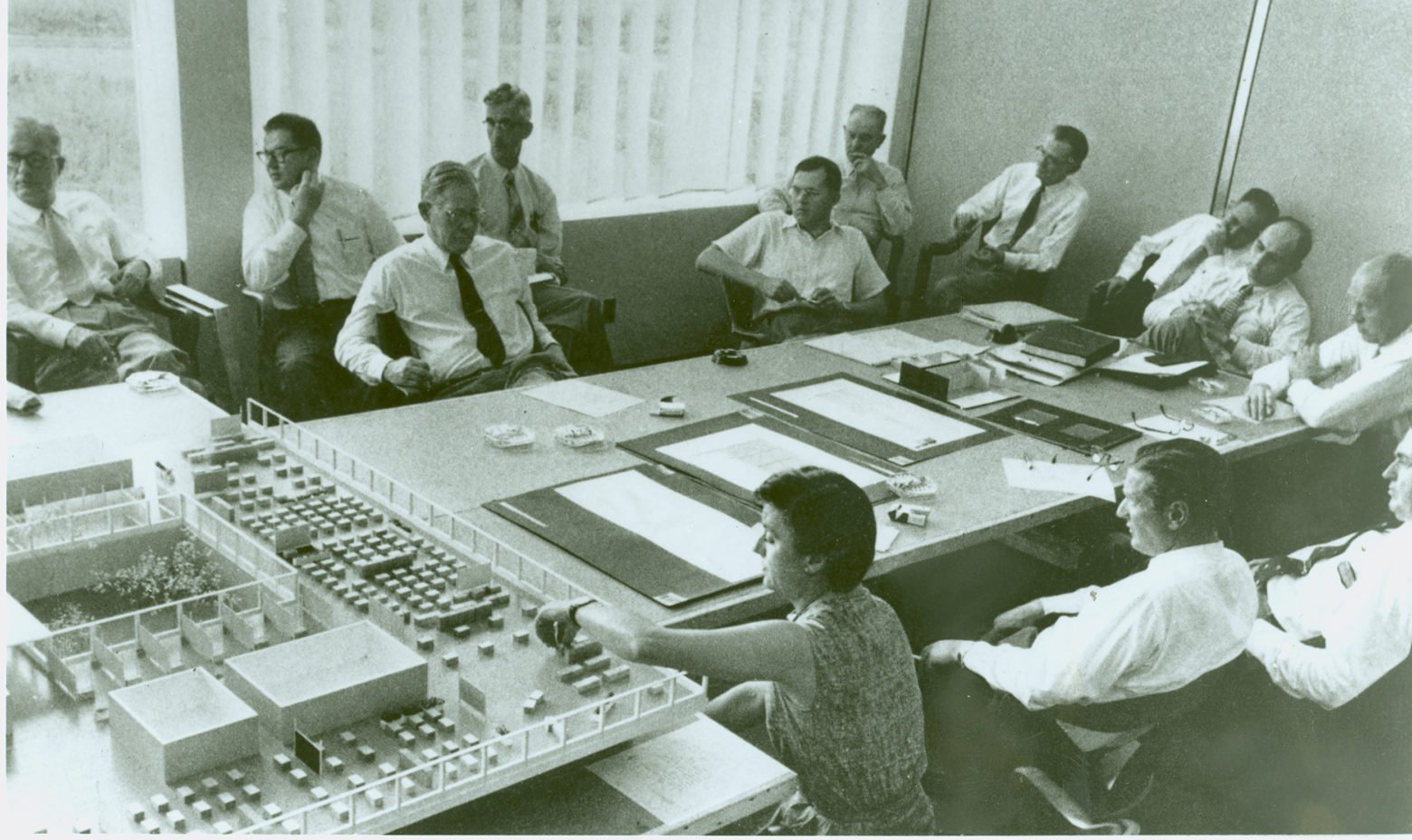
The Knoll Planning Unit, 1950
Many principles she championed, such as understanding how people move through and use a space, remain fundamental to interior design today.
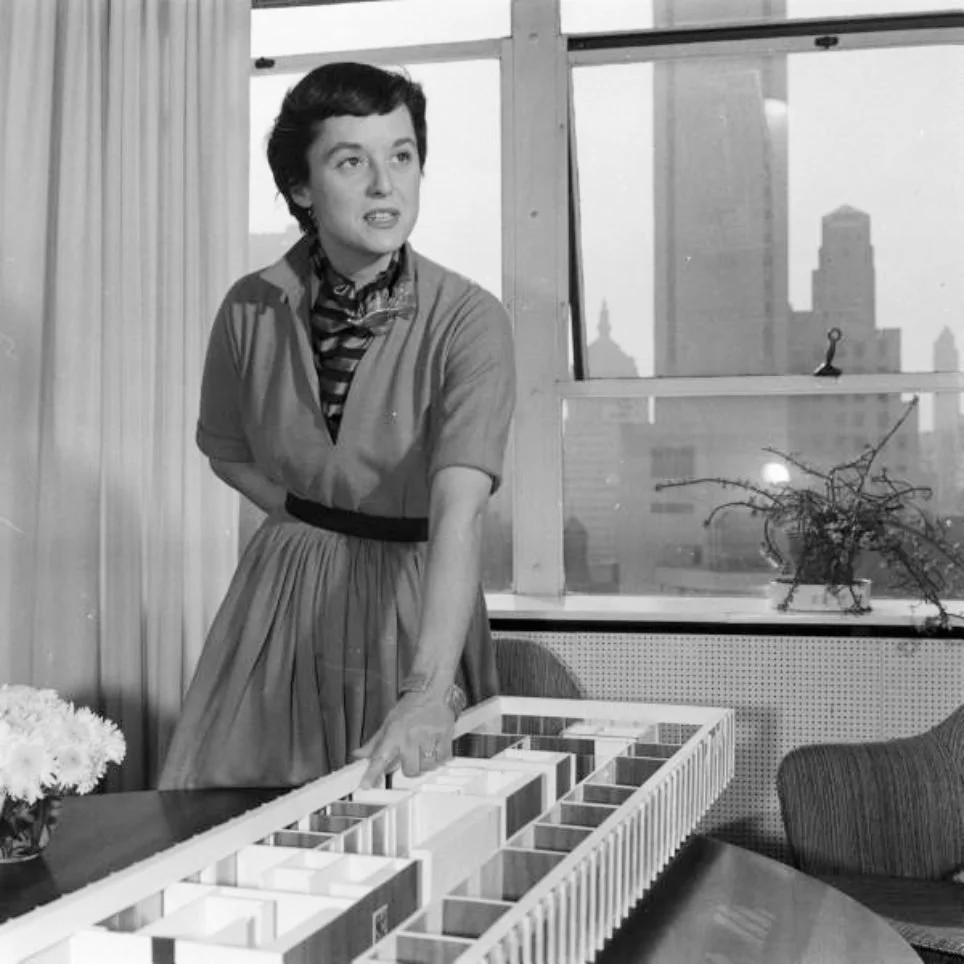
Florence Knoll Bassett with Model
““I designed the architectural spaces that were needed to make the room work, things like the walls or the sofas.””
India Mahdavi (b. 1962)
Contemporary designer India Mahdavi is known for creating vibrant interiors that blend architecture, furniture, and color into immersive environments. Based in Paris, her multidisciplinary studio works across interiors, product design, and architecture.
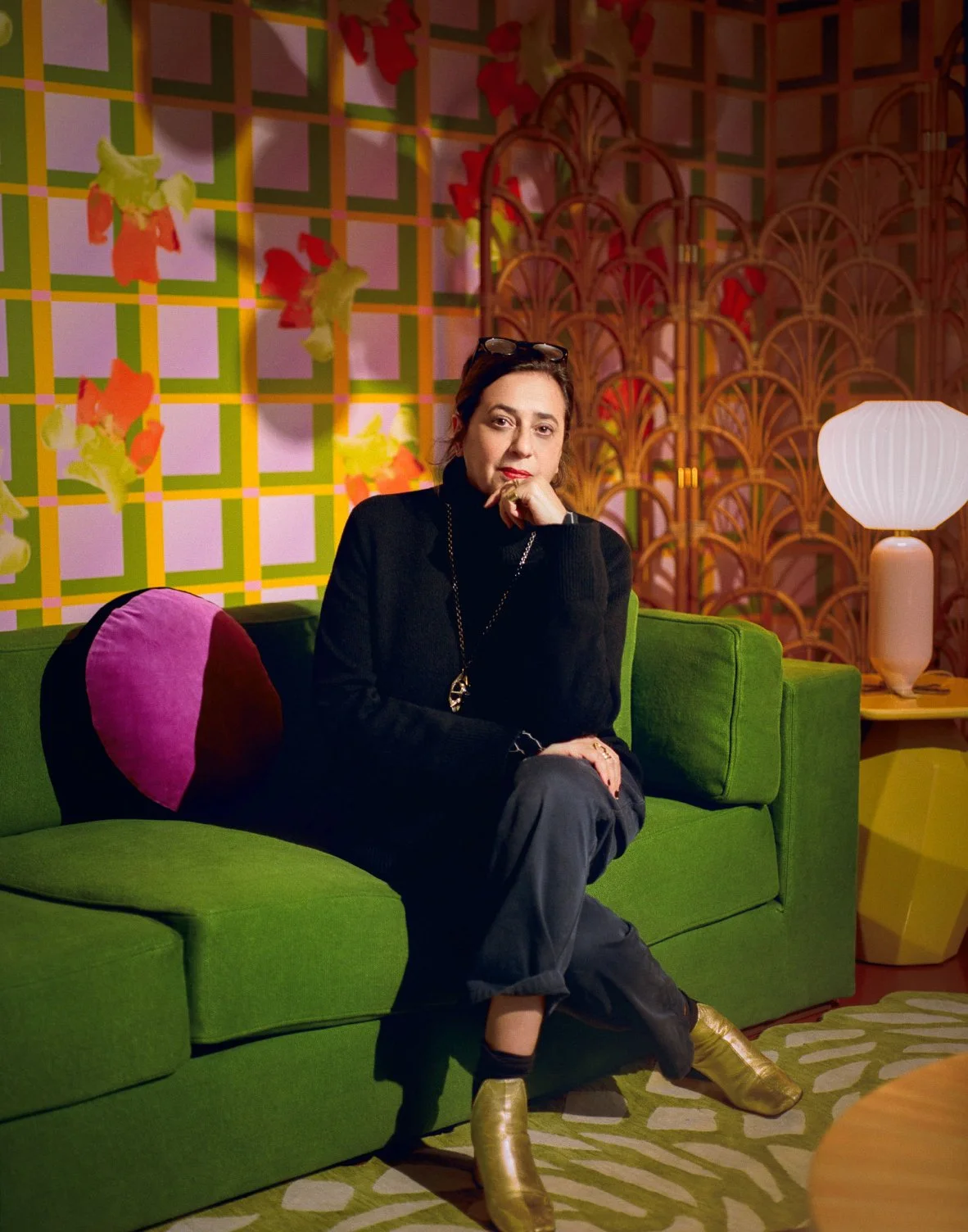
India Mahdavi
Mahdavi’s work is recognized for its playful use of color, sculptural forms, and refined yet approachable atmosphere. Her projects, ranging from boutique hotels to restaurants and furniture collections, often reflect her multicultural upbringing and global perspective.
One of her most recognizable designs is The Gallery at Sketch in London, a striking pink dining room that became an international design icon and demonstrates how bold color and thoughtful design can create memorable spaces.
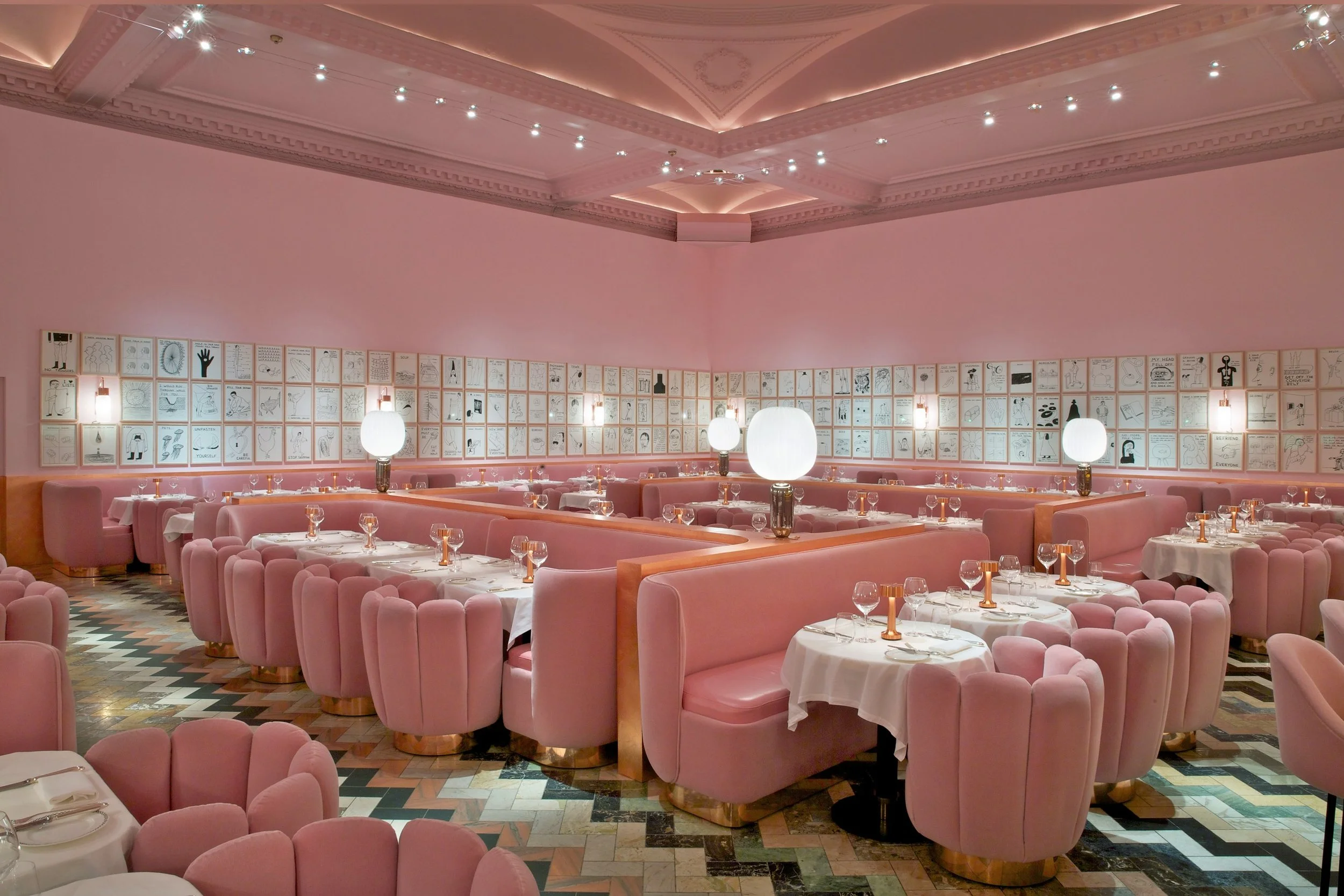
The Pink Dining Room in The Gallery Sketch in London
Honoring Women in Design
The women who shaped the design industry did more than create beautiful spaces—they redefined how we think about interiors, architecture, and the role design plays in everyday life.
At Kali-Lu Interiors, we’re continually inspired by the creativity and leadership of the women who paved the way in our field. This Women’s History Month, we celebrate their lasting influence and the designers who continue to push the industry forward today.