Designing a Calming Bedroom: A Designer’s Guide to Creating a Serene Retreat
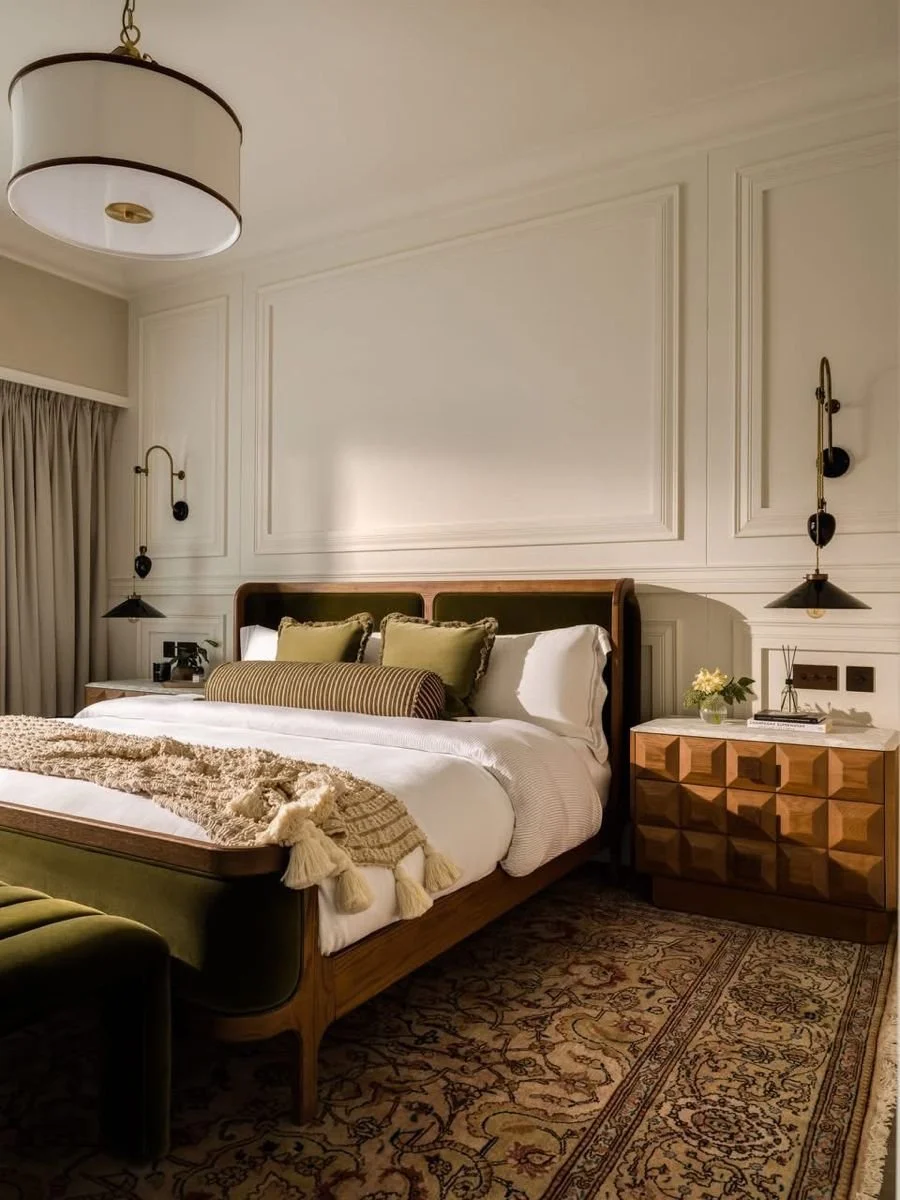
The bedroom is one of the most personal spaces in a home—the place where you begin and end each day. More than any other room, it should feel restorative, calm, and deeply personal, supporting both rest and daily rituals.
A well-designed bedroom is less about following trends and more about creating an atmosphere that feels intentional, layered, and quietly luxurious. Through thoughtful layout, materials, lighting, and storage, a bedroom can become a true sanctuary.
10 Designer Steps to Creating a Calming Bedroom
1. Identify What You’re Keeping
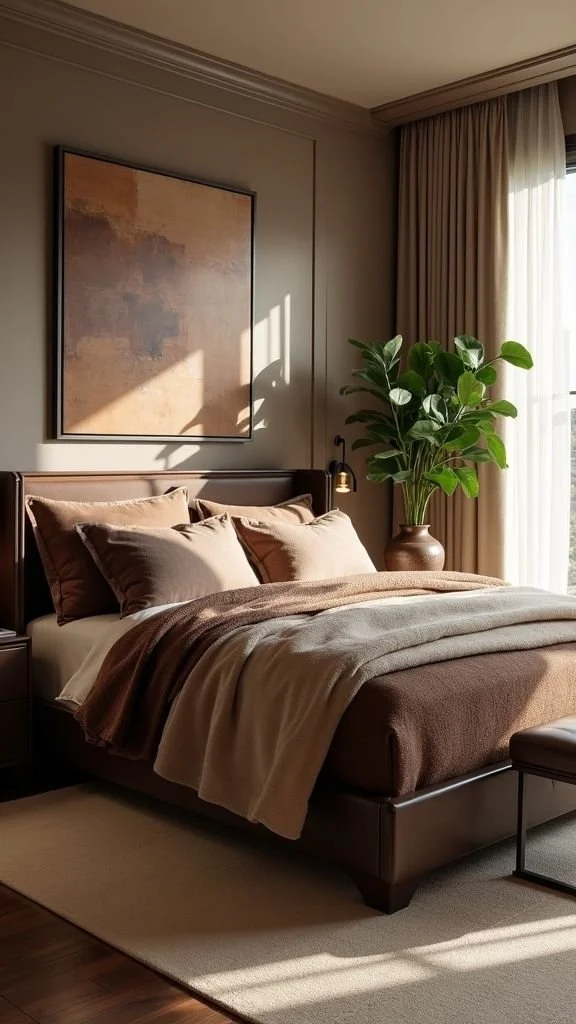
Begin by assessing your existing furniture and architectural elements. Keep pieces that you love, that function well, and that you want to use as a foundation for the new design.
Anchor pieces such as the bed, nightstands, and rugs often guide the scale, palette, and mood of the entire space, making them a natural starting point.
2. Define the Function of the Space
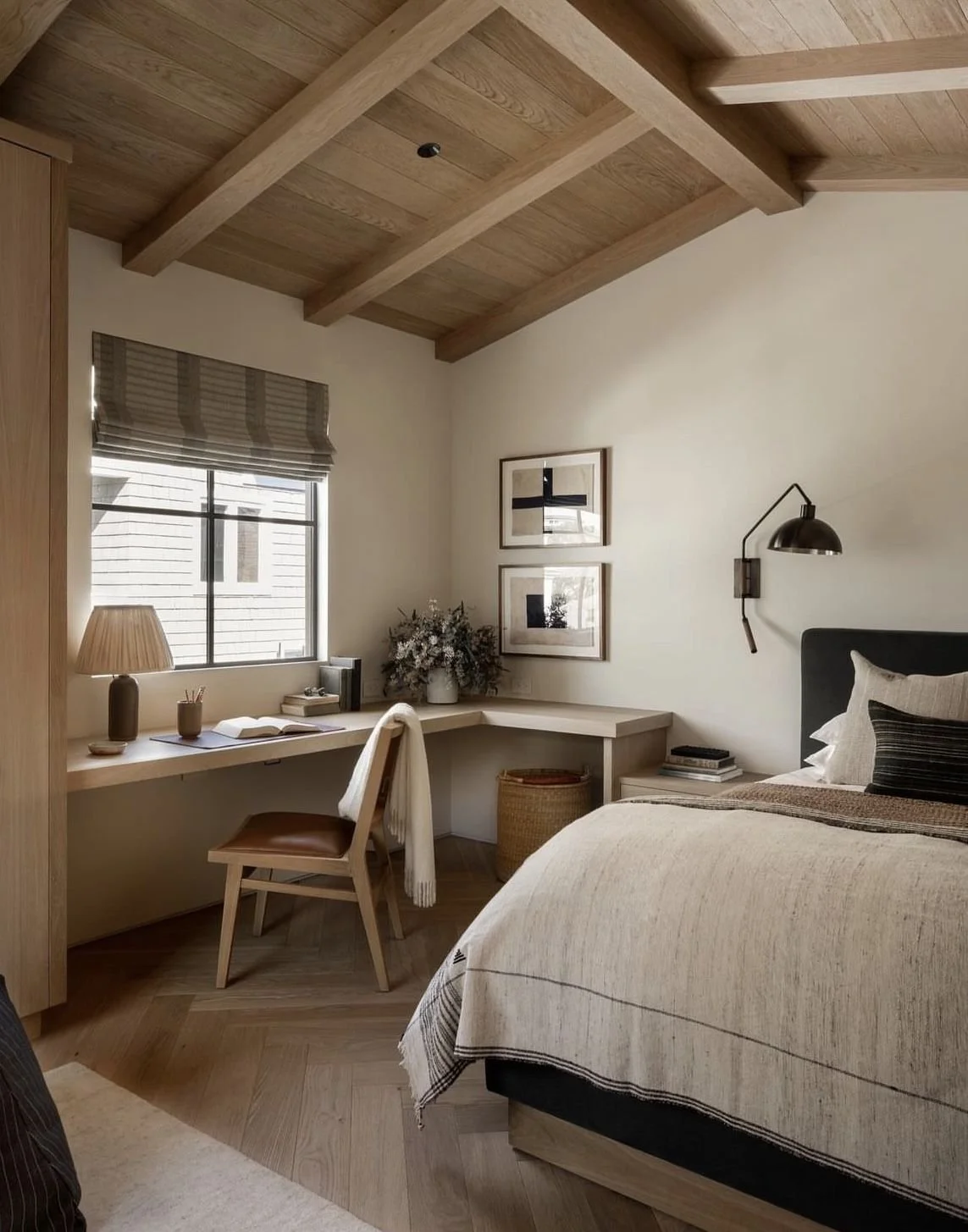
Bedrooms today often serve multiple purposes—sleep, reading, dressing, or quiet work. Clarifying how the room functions will inform layout, furniture selection, and lighting placement.
A bedroom designed purely for sleep will feel very different from one that doubles as a home office or lounge.
3. Define the Emotional Goal
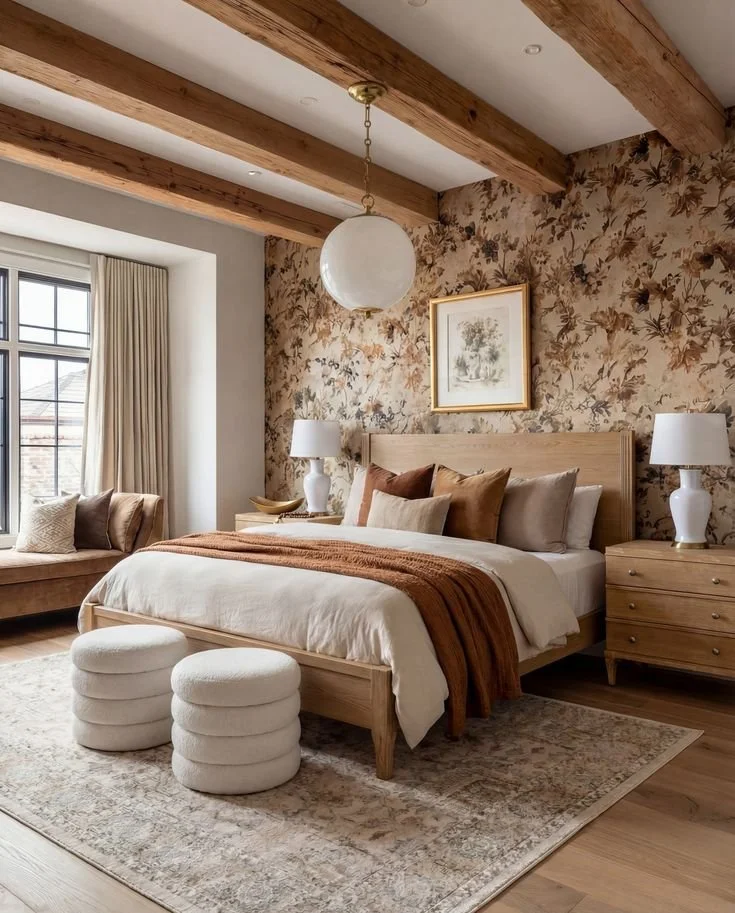
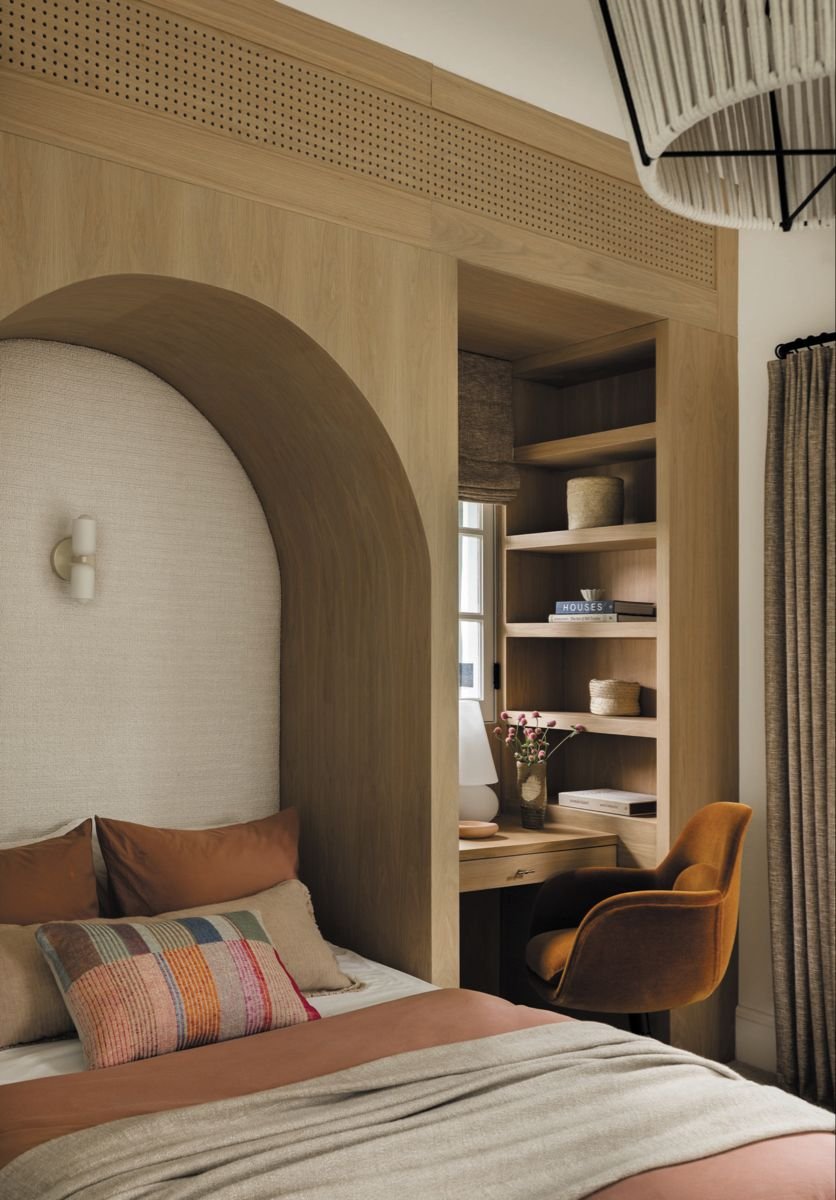
Before selecting finishes, define how you want the room to feel—serene, cozy, airy, grounded, or minimal. This emotional framework becomes the foundation for all design decisions.
4. Look to Nature and Personal Relaxation References
Reflect on environments that make you feel calm—luxury hotels, spas, coastal retreats, mountain cabins, or personal memories. Observe the materials, colors, lighting, and overall atmosphere that contribute to that sense of ease.
Translate these observations into guiding keywords such as organic, muted, layered, or soft.

5. Select a Calming Color Palette and Materials
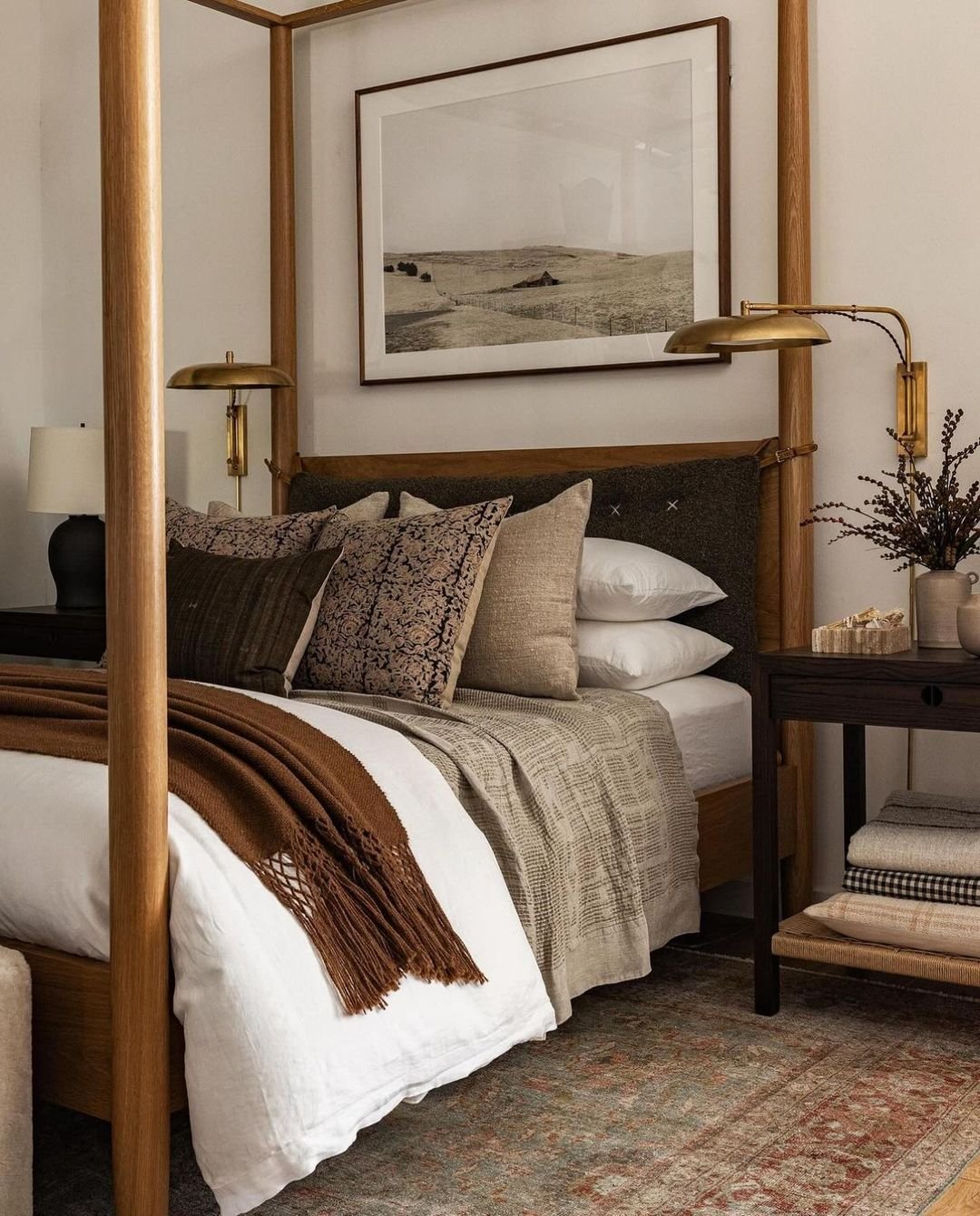
Choose colors and materials that support relaxation. Warm whites, muted greens and blues, and soft earth tones create a grounded base, while natural materials such as wood, linen, wool, and stone add warmth and depth.
Prioritize tactile, matte finishes over high-gloss surfaces to create a softer, more restful environment.
“We love using wallpaper in bedrooms. It can be a great addition to add texture, relaxing motifs and calming color. There are endless options to curate your exact vision. ”
6. Curate Visual Inspiration
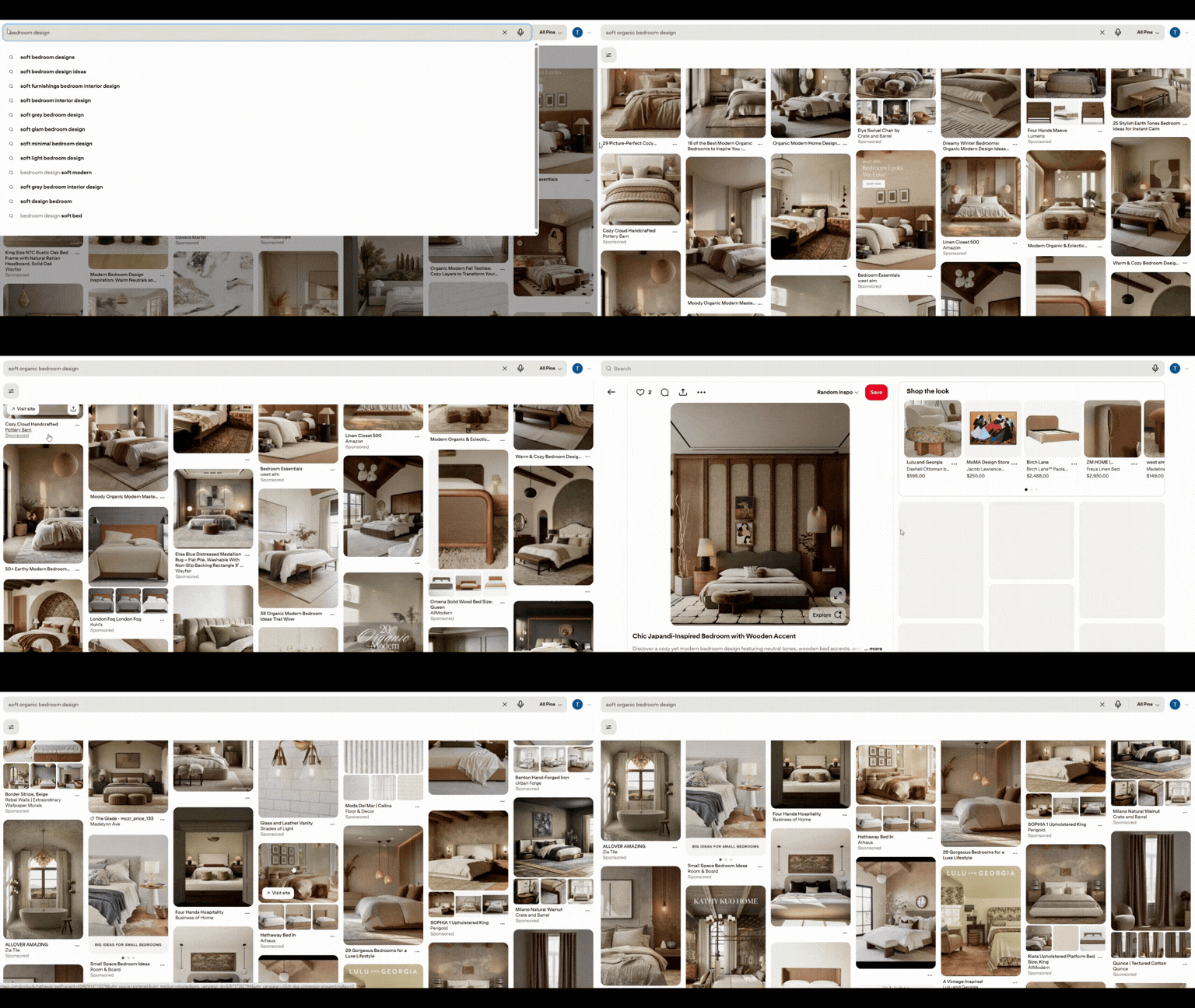
Gather imagery that reflects the mood you want to achieve. Create a mood board using your keywords and reference images to maintain a cohesive vision throughout the design process.
7. Plan Layout and Flow
Consider furniture placement, circulation paths, and visual balance. Thoughtful layout decisions, such as bed placement, balanced nightstands, and clear walkways contribute to a sense of order and calm.
8. Layer Soft Elements and Textiles
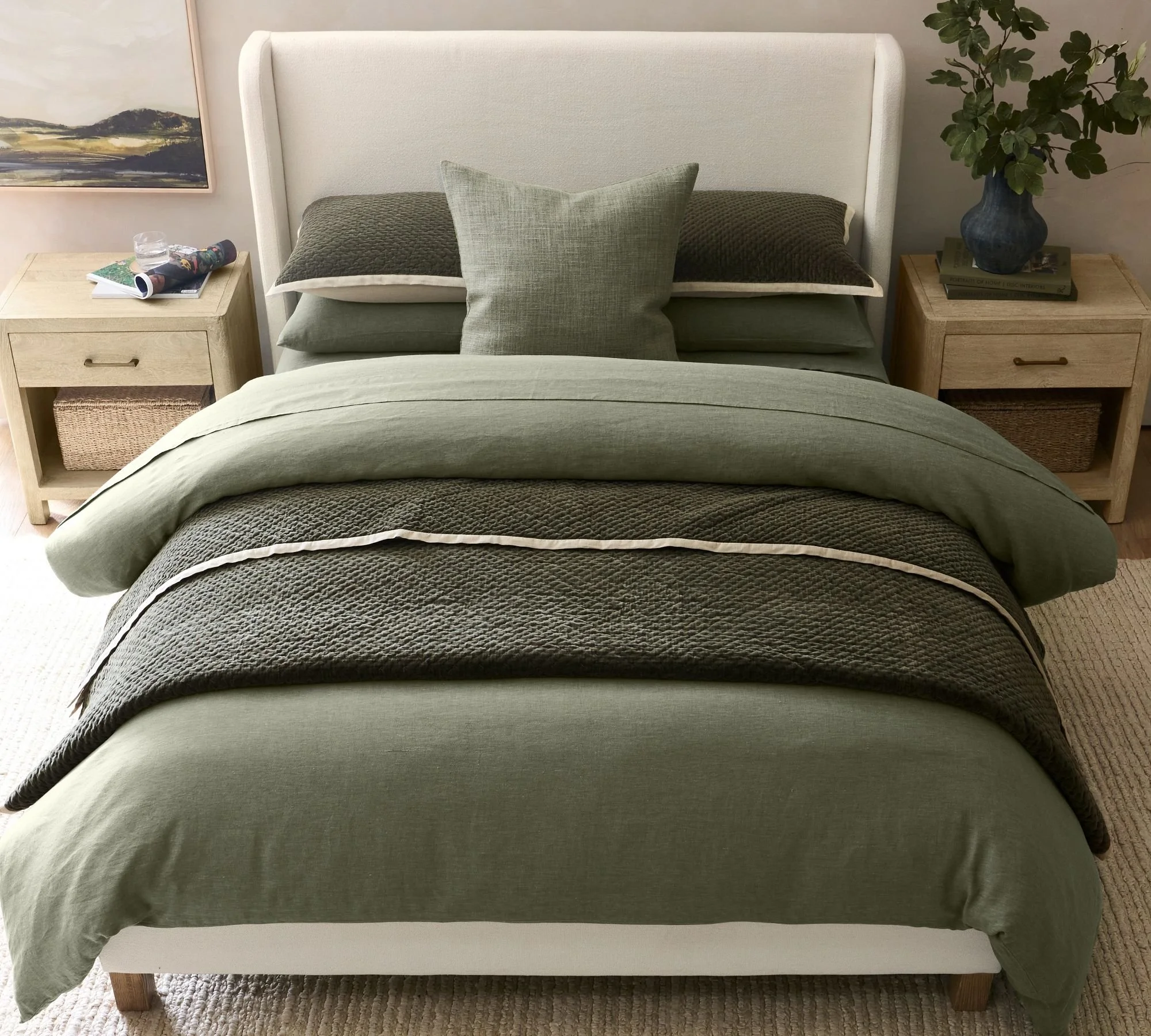
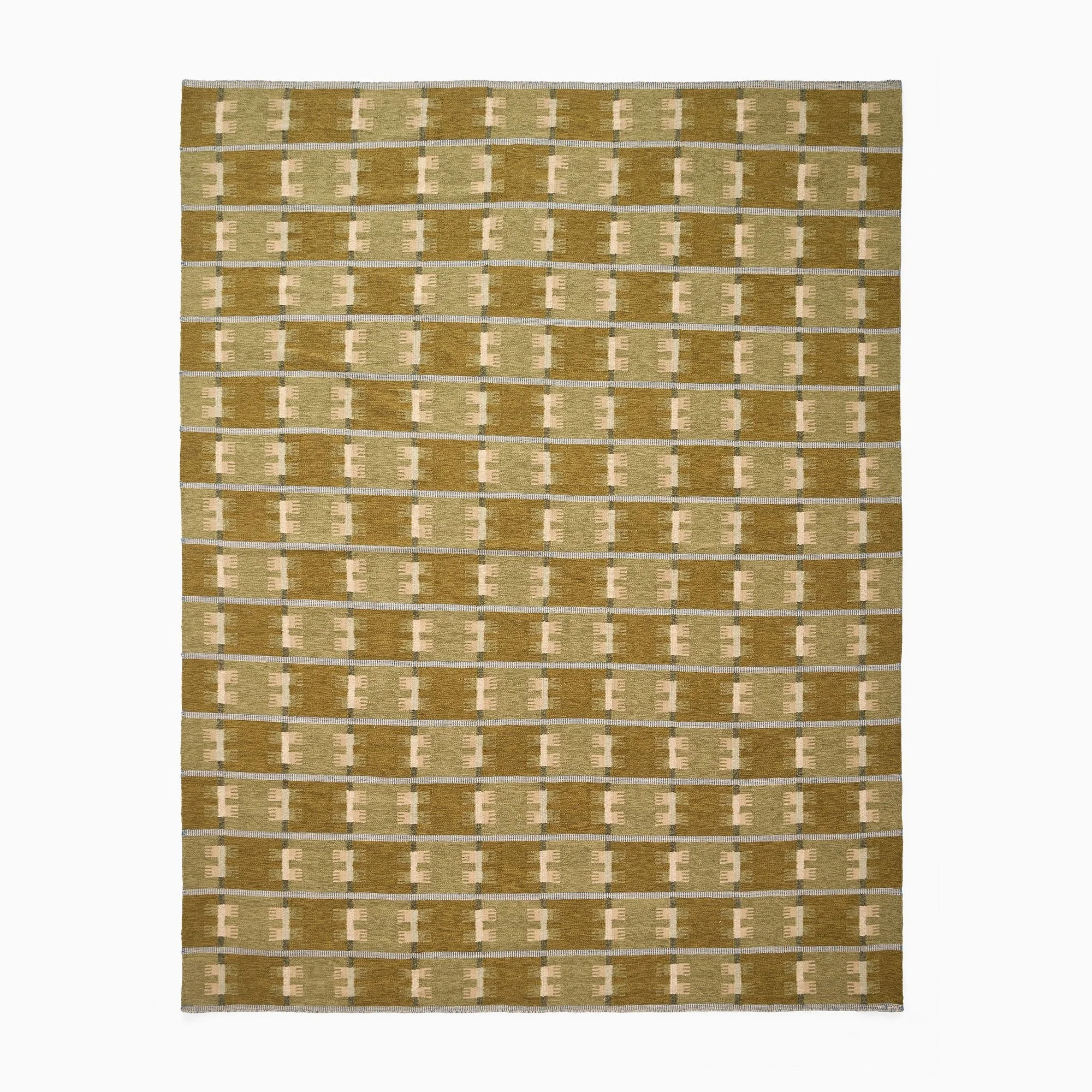
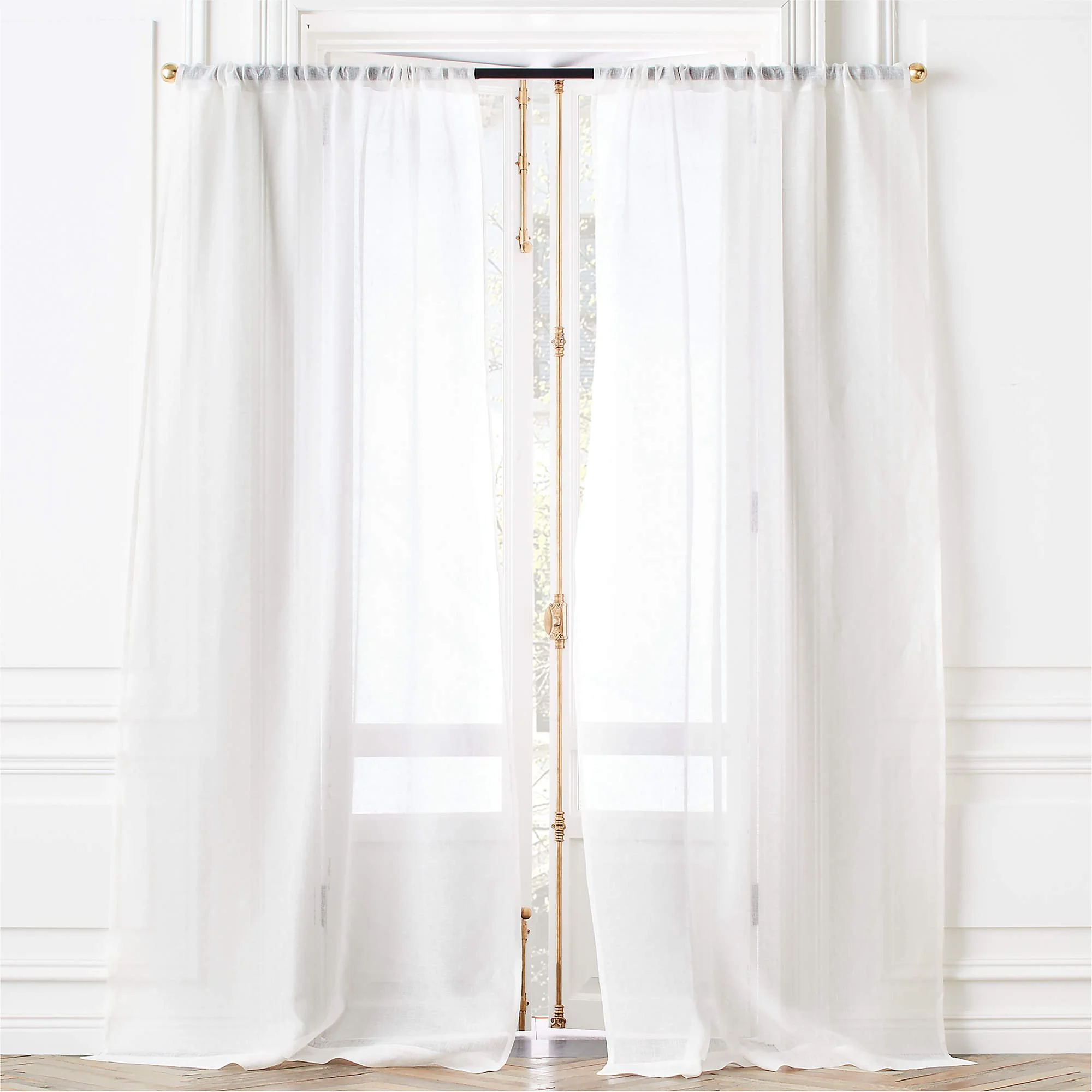
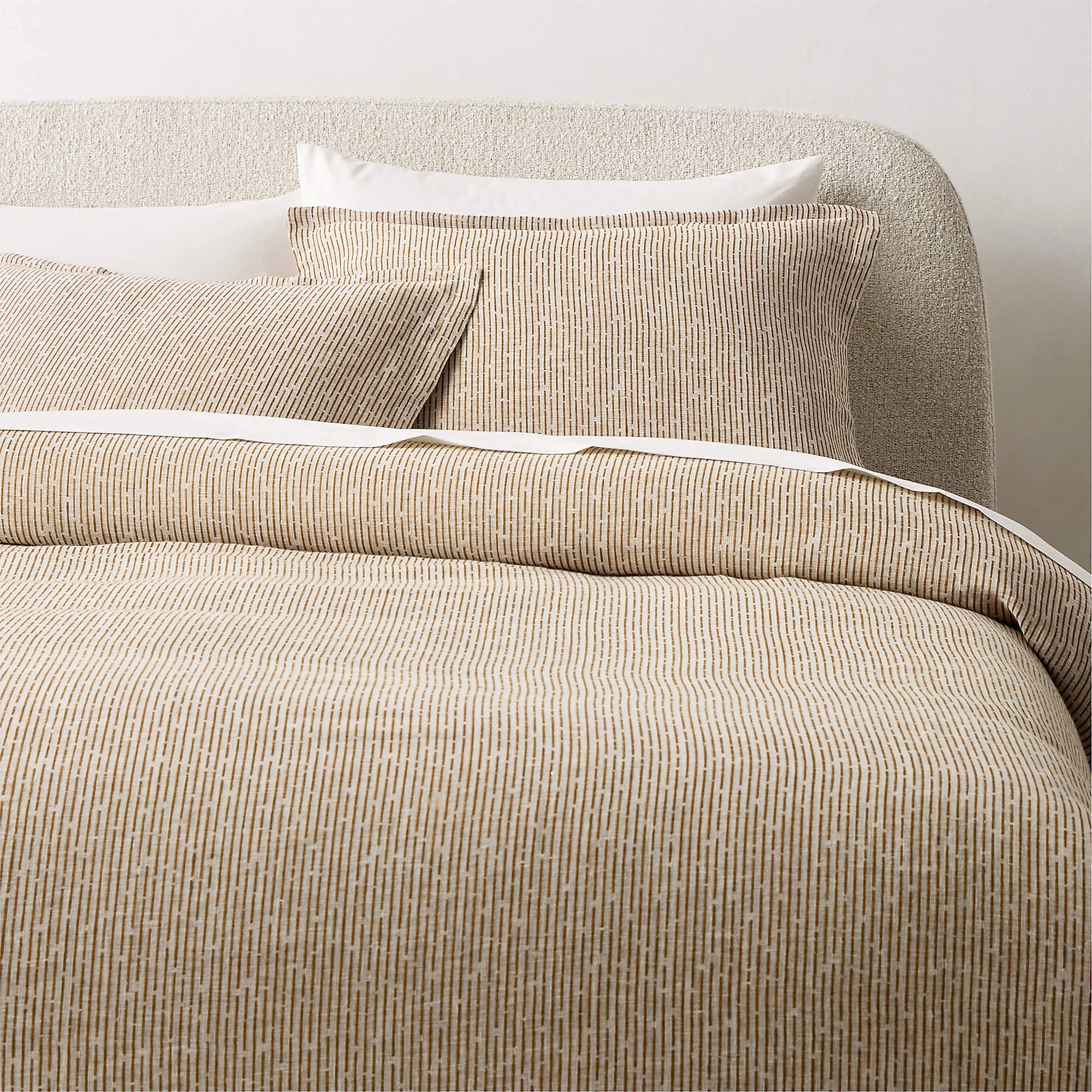
Introduce softness through layered bedding, rugs, and window treatments. Drapery, upholstered headboards, and natural fiber rugs add acoustic softness and tactile comfort, enhancing the sense of retreat.







9. Translate Inspiration Into Product Selections
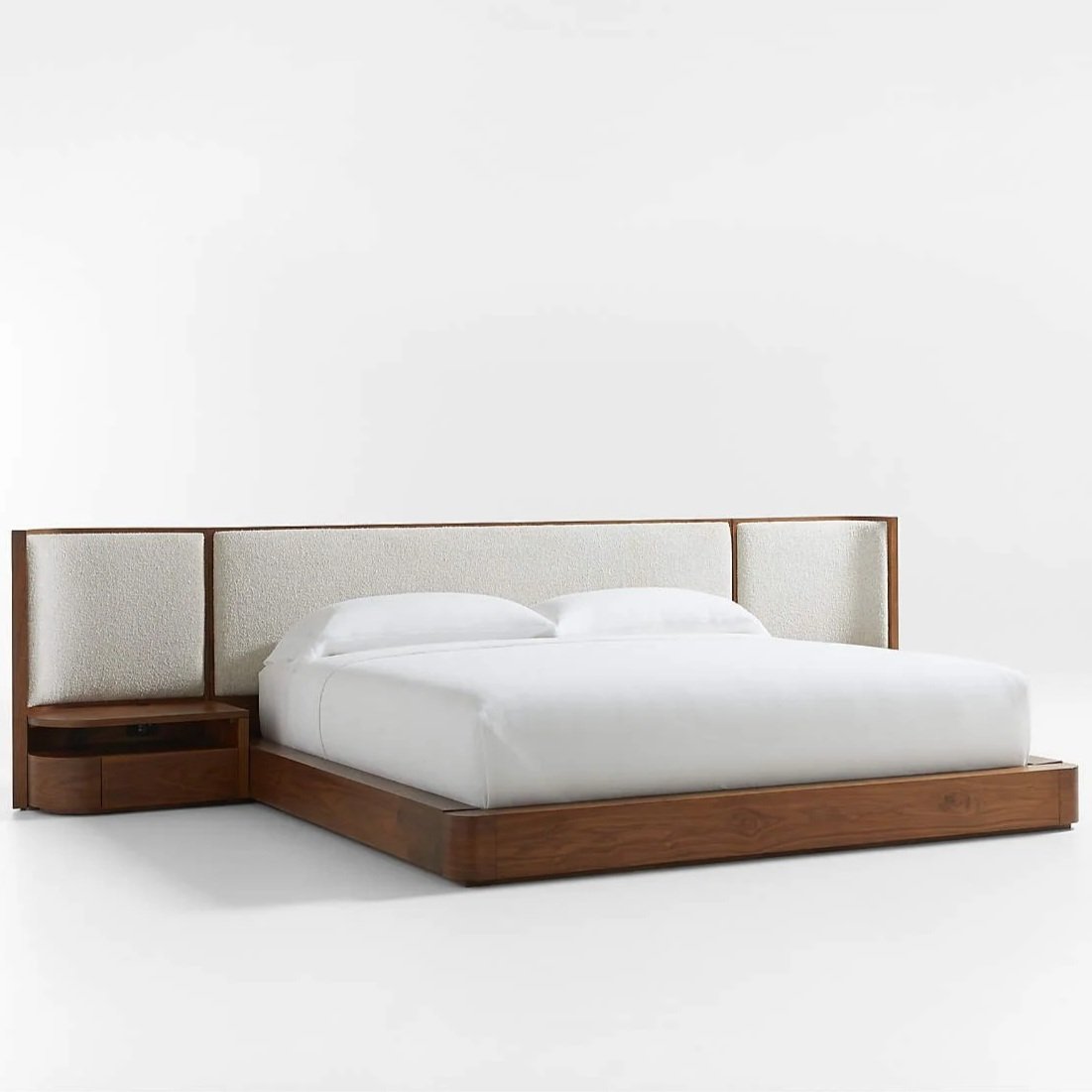
Use your mood board to guide furniture, lighting, and textile sourcing. An interior designer can refine scale, proportions, and material quality to ensure the space feels cohesive and elevated.
“Don’t want to deal with the headache of sorting through tons of products to find the right one for you? Our team at Kali-Lu Interiors can help you find the perfect products. We also have access to luxury brands that only sell to the trade for an even more customized look.”
10. Experience Materials in Person
Whenever possible, visit showrooms to see and feel fabrics and finishes. Tactile quality is a key contributor to a calming bedroom, especially for bedding, upholstery, and rugs. Our lead designer, Tessa, can provide expert guidance through the Denver Design District, showcasing some of the best products in the interior design industry.
Interior Designer Tips for a More Relaxing Bedroom
Layer Your Lighting
Lighting is one of the most powerful tools for creating atmosphere. Combine ambient ceiling lighting, bedside task lighting, and subtle accent lighting. Use warm bulbs and dimmers to transition from functional to restorative lighting throughout the day. See our blog post about lighting for all spaces.
Choose Paint Colors That Support the Mood
Paint color sets the emotional tone of the room. Warm whites and creams feel airy, muted greens and blues evoke nature, and warm taupes and grays create a cocooning effect. Always test samples in different lighting conditions before committing.










Reduce Visual Clutter With Integrated Storage
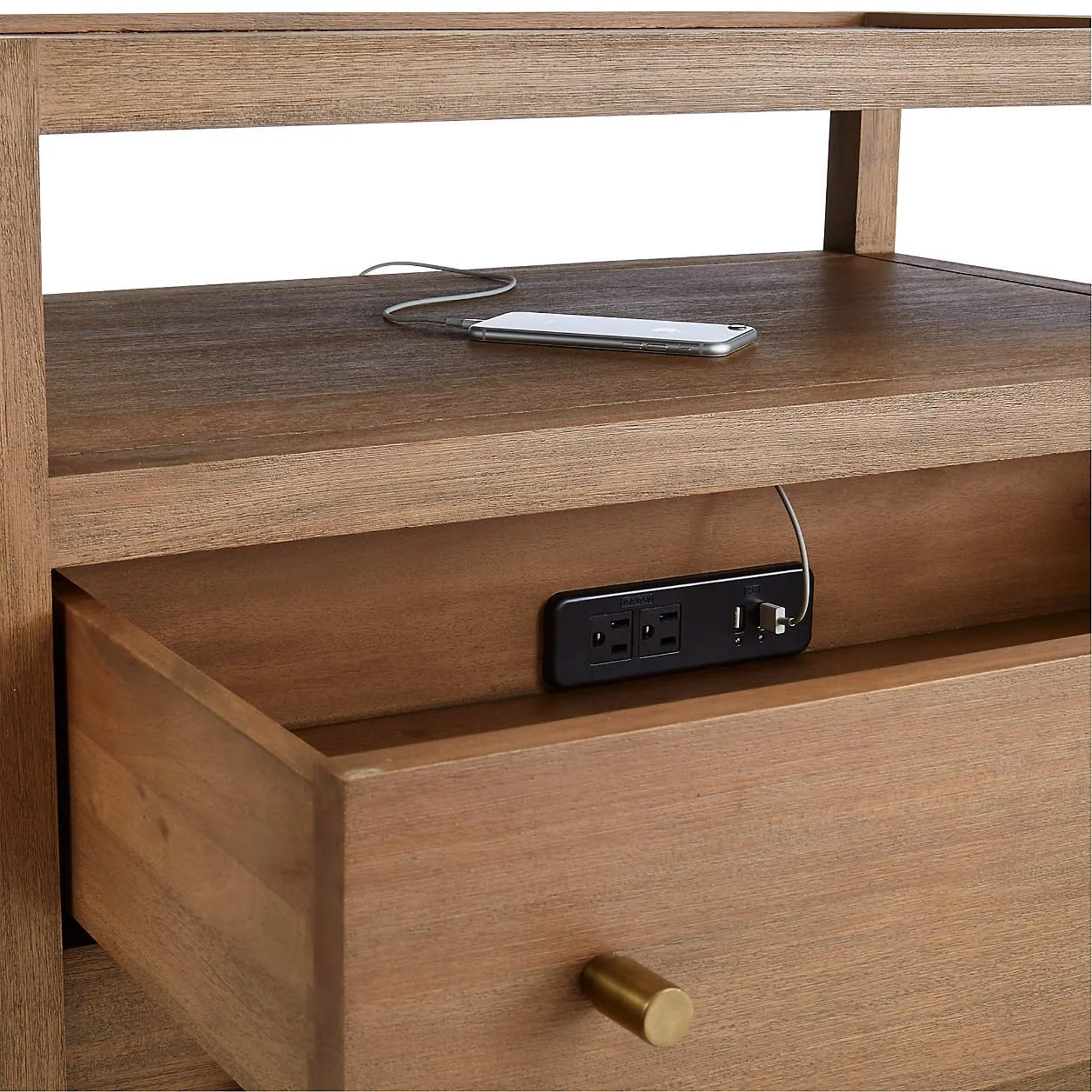
A visually quiet room feels more peaceful. Choose nightstands with drawers, under-bed storage for seasonal items, and custom or modular closet systems to keep belongings concealed and organized.
Minimize or Discreetly Integrate Technology
Research increasingly suggests that limiting technology in the bedroom can improve sleep quality and relaxation. When possible, keep televisions out of the bedroom and conceal charging stations or devices within cabinetry to maintain a serene aesthetic.
Invest in Quality Pieces Within Your Budget
Prioritize quality where it matters most—mattresses, bedding, lighting, and foundational furniture. Well-crafted pieces elevate both comfort and longevity, creating a bedroom that feels timeless and intentional.
Designing a Bedroom as a Personal Sanctuary
A calming bedroom is the result of intentional choices: a thoughtful layout, restrained palette, tactile materials, layered lighting, and curated storage. When designed with purpose, the bedroom becomes a sanctuary—supporting rest, wellbeing, and everyday rituals.